Chrome Passivation
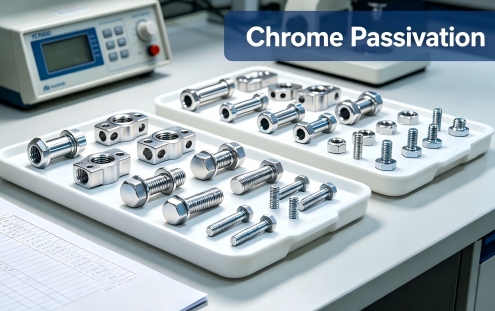
Chrome passivation is a chemical treatment that converts the surface of zinc or stainless steel into a corrosion-resistant chromate layer, enhancing durability and appearance.
Productprocess flowTDSMSDSID:Product Details
process flow
TDS
MSDS
Chrome passivation, also known as chromate conversion coating, is a chemical process that transforms the surface of zinc-plated metals into a complex layer of chromium compounds. This layer is integrally bonded to the metal and serves two main purposes: corrosion resistance and aesthetic enhancement. The chromate layer acts as a barrier against environmental corrosion and can "self-heal" minor scratches in traditional hexavalent chromium coatings by redistributing soluble chromium to damaged areas, maintaining protection
Types of Chrome Passivation
-
Hexavalent Chromates (Cr⁶⁺)
- Uses hexavalent chromium as the active ingredient in an acidic solution.
- The acid partially dissolves the zinc surface, reducing Cr⁶⁺ to Cr³⁺, forming a gelatinous mixture of insoluble and soluble chromium compounds.
- Provides self-healing properties due to the soluble Cr⁶⁺.
- Highly regulated due to toxicity and carcinogenicity, though still used in aerospace and defense applications
-
Trivalent Chromates (Cr³⁺)
- Uses trivalent chromium, which is less toxic and environmentally safer.
- Forms a complex matrix of Cr³⁺ compounds without the soluble Cr⁶⁺ reservoir, so it lacks self-healing but still offers strong corrosion resistance.
- Increasingly preferred in industry due to regulatory restrictions on hexavalent chromium
-
Chrome-Free Alternatives
- Modern passivation technologies use zirconium, titanium, or other non-chrome formulations to provide corrosion protection while being environmentally friendly
- The effectiveness of passivation depends on surface cleanliness, alloy composition, and application conditions.
- For stainless steel, passivation removes free iron from the surface, allowing a stable chromium-rich oxide layer to form, which enhances corrosion resistance
-
For zinc-plated metals, the chromate layer thickness, reactivity of the alloy, and process parameters determine corrosion resistance and post-processing performance
Chrome passivation remains a critical finishing step in metal treatment, balancing corrosion protection, aesthetics, and regulatory compliance, with ongoing development toward safer, high-performance alternatives.