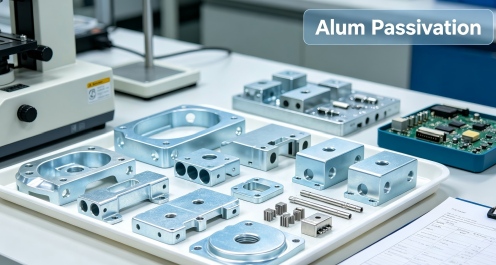
Alum passivation
Aluminum passivation is a process that enhances the corrosion resistance of aluminum by creating a protective oxide layer on its surface. This layer, known as a passive film, prevents further oxidation and corrosion, making aluminum more durable and reliable in various applications
Productprocess flowTDSMSDSID:Product Details
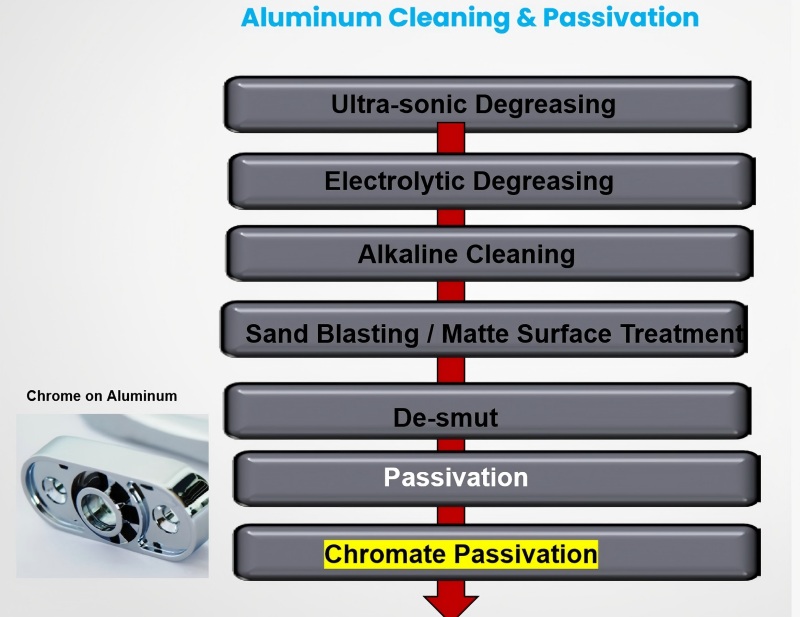
process flow
TDS
MSDS
Aluminum passivation involves treating the surface of aluminum to create a thin, chemically inert oxide layer that protects the underlying metal from corrosion caused by moisture, oxygen, salts, and industrial chemicals. While aluminum naturally forms a thin oxide layer when exposed to air, this natural layer can be fragile. Passivation strengthens and stabilizes it, making the metal more durable and resistant to environmental degradation
Methods of Passivation
- Chemical Treatments: Aluminum is immersed in solutions, often containing nitric acid, to form a stable oxide layer on the surface
- Anodizing: An electrolytic process that thickens the oxide layer, providing enhanced corrosion protection and uniformity.
-
Mechanical Polishing: Removes surface impurities to allow a more uniform oxide layer to form
The resulting oxide layer is typically nanometers to a few micrometers thick, causing minimal dimensional changes, which is advantageous for high-precision components
- Corrosion Resistance: Significantly reduces the rate of oxidation and protects aluminum in harsh environments
- Longevity: Extends the service life of aluminum components, reducing maintenance and replacement costs
- Aesthetic Improvement: Produces a smoother, more lustrous surface
- Self-Healing: Minor scratches can reform the oxide layer naturally, maintaining protection
- Compatibility with Electrical Applications: Unlike thick anodized layers, passivation maintains electrical conductivity where needed