Tin PLate on Copper BusBar
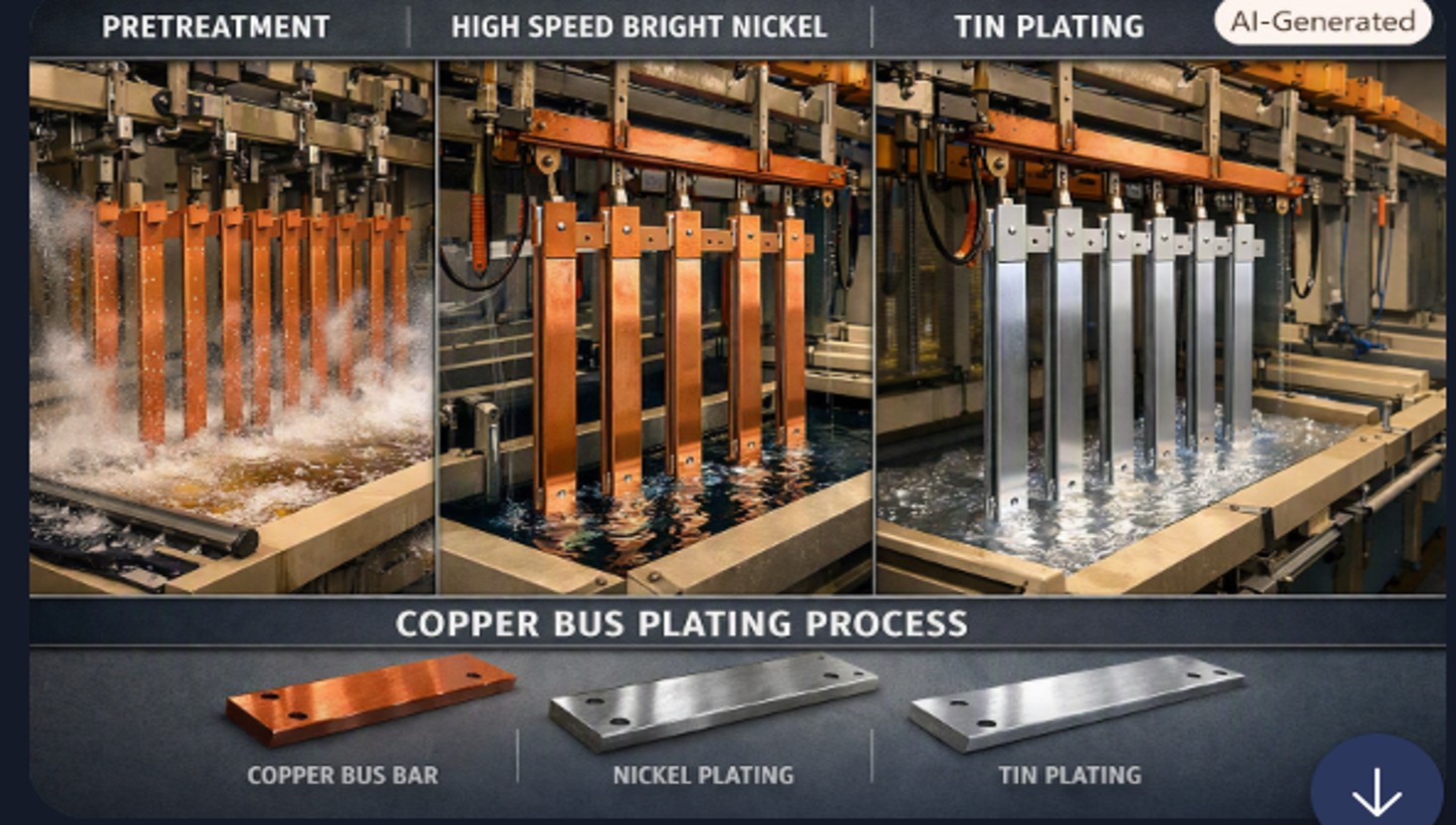
Enhances conductivity , prevents corrosion and improve solderability . Involve surface preparation, acid activation, tin plating, post treatment .
Productprocess flowTDSMSDSID:Tin PLate on Copper BusBarProduct Details
process flow
TDS
MSDS
Tin plating is a common coating applied to a large variety of copper products including busbars, electrical terminals, battery connectors or any other copper component used in the passing of current. With the electrification vehicles, power equipment and interconnectivity of the internet of things, the need for conductive coatings such as tin plating is growing due to its low cost, conductive and solderability properties.
Copper Busbars are plated with bright or matte tin to further enhance the corrosion protection, electrical conductivity and solderability of the copper bus bar. Tin has many favorable properties including excellent conductivity, solderability, corrosion protection and it provides an optimal surface for electrical and heat transfer. Unlike raw copper bus, the tin coating provides a soft and ductile barrier which does not easily oxidize when exposed to oxygen or other elements. A raw copper bus will oxidize and lose conductivity very rapidly as compared to a tin coating. Although tin will eventually lose some conductivity tin forms a relatively thin oxide is still reasonably conductive.
Electrolytic Bright Tin: Bright tin should be specified for copper bus bars or contacts that require improved electrical conductivity, corrosion protection and lubricity. Bright tin is a lustrous deposit that offers improved cosmetic appeal as well as these improved functional characteristics. However, bright tin should not be used in soldering applications as the brightener systems used to create the bright deposit will co-deposited organic elements into the tin deposit. These organic brighteners can cause de-wetting or even charring or blackening of the solder joint which can impede the durability of the solder joint especially when using mild fluxes.
Electrolytic Matte Tin (Solderable Tin): Matte or solderable tin should be specified for copper bus bars or contacts that require soldering, improved electrical conductivity, and corrosion protection with an industrial non-reflective finish. Due to the coarse grain structure, matte tin can result in higher initial insertion forces of mating contacts. A un-brightened nickel underplate is recommended prior to the matte tin to minimize diffusion of base material elements such as copper or zinc (for brass components) into the tin deposit. The nickel underplate provides an excellent base to solder to and ensures the longest possible shelf life of a solderable, matte tin deposit.
Matte tin is less aesthetically pleasing compared to bright tin but will provide a functional finish for soldering since it is free of any intentionally added organic compounds. The dull finish of matte tin can be burnished by part-to-part contact and as such care should be taken in packaging of larger parts to minimize contact if a uniform, dull finish is desired. Larger of heavier barrel plated parts will naturally have burnishing marks on the surface.
Tin/Lead: Tin/lead plating is an alloy of tin and lead that can range from 5/95 (5% tin to 95% lead) to 95/5 (95% tin to 95% lead) tin/lead. The specific alloy will affect coating properties such as corrosion & chemical resistance, melting point and solderability. Tin/lead plating of copper bus bars or contacts is often used when tin/lead solder is specified. The addition of a small percentage of lead within the tin prevents the formation of tin whiskers which is desirable for critical electronic applications where whiskers can cause a short circuit path. The addition of lead greatly improves the chemical resistance of the deposit to mineral acids such as sulfuric acid making tin/lead plating of copper bus bars popular for lead/acid battery applications