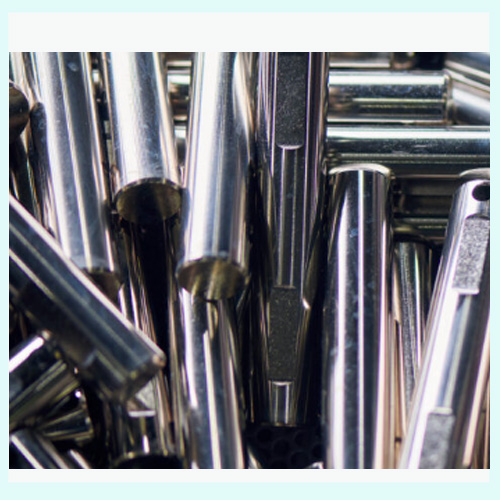
Bright tin plating integrates decorative beauty and functional practicability. It is the preferred surface finishing for electronic appearance parts, precision connectors, hardware accessories and household electronic components. Compared with matt tin, it has superior surface gloss and flatness; with stable solderability and conductivity, it balances appearance and functional performance, and is widely used in civilian electronics, electrical appliances and precision hardware industries.
Standard Bath Formula & Composition Characteristics
Industrial bright tin plating mainly adopts a high-stability sulfuric acid acidic electrolyte system, featuring high current efficiency, fast deposition speed and excellent leveling performance, which is the mainstream formula for mass production of glossy tin finishing.
Major Bath Components
• Main Metal Salt (Stannous Sulfate) Provides high-purity divalent tin ions for electrochemical deposition. Ensures the formation of high-purity pure tin coating, effectively guaranteeing basic electrical conductivity and solderability of the plating layer.
• Base Acid (Sulfuric Acid) Serves as the conductive medium of the plating bath, stabilizes the solubility of tin ions, inhibits hydrolysis and oxidation of stannous ions, reduces bath sludge, and improves overall current efficiency and solution stability.
• Composite Brightener & Leveler (Core Formula) Consists of aromatic organic compounds, surface active agents and specialized leveling agents. This composite system strongly refines tin crystal grains, suppresses coarse crystal growth, flattens microscopic surface unevenness, and forms a continuous mirror-gloss surface. It is the key additive that distinguishes bright tin from matt tin plating.
• Anti-Oxidation Stabilizers Effectively prevents the oxidation of stannous ions into insoluble stannic tin sludge, maintains long-term bath clarity, reduces solution aging, and stabilizes consistent gloss and coating quality in continuous production.
• High-Efficiency Wetting Agents Reduces surface tension of the electrolyte, eliminates pinholes, pitting and air trapping defects, ensures uniform wetting on complex structural parts, and improves full coverage of the bright tin layer.
Standard Operating Parameters
Temperature: 22–32°C | Current Density: 0.6–2.5 A/dm² | pH: <1.0 | Continuous air agitation & circulating filtration