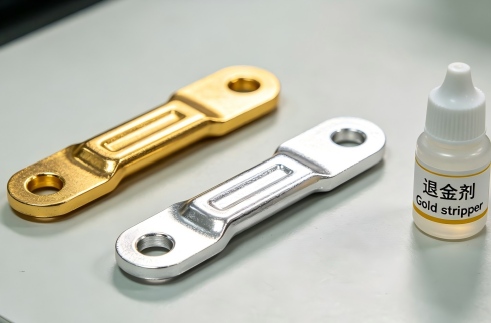
Gold Stripper Procedure
1. Strip gold powder and gold
2. Adjust pH to 4 with sulfuric acid
3. Displace with zinc wire for 3–4 hours
4. Dissolve zinc wire (1 part sulfuric acid, 3 parts water) into powder
5. After it becomes powder, add an equal amount of water and filter
6. After filtering, put the powder and filter paper into a quartz beaker, add concentrated sulfuric acid and boil (about an hour, with ventilation)
7. When you see sponge gold, pour out the waste acid and rinse several times with clean water
8. Dry and smelt
Core Functions
-
Selective gold layer stripping: Remove soft gold, hard cobalt‑alloyed gold, immersion gold (ENIG) without significant corrosion of nickel, copper or base hardware, for re‑work of defective plated components.
-
Precious‑metal recovery: Dissolve gold coating into working bath for subsequent gold precipitation and recycling, maximising precious‑metal yield from rejected parts or e‑waste components.
-
Surface preparation for re‑plating: Produce clean, uniform substrate surface after complete gold removal to guarantee adhesion for follow‑up plating operations.
-
Process defect correction: Eliminate excess gold plating, over‑plating or mis‑plating without destroying high‑value base workpieces.
Typical Bath Formulation
1. Alkaline Cyanide‑Type Gold Stripper (traditional process)
-
Sodium / potassium cyanide (complexing agent): 40‑80 g/L, forms soluble gold‑cyanide complex[Au(CN)₂]⁻
-
Alkaline hydroxide (NaOH / KOH): 15‑30 g/L, maintain high pH 11‑13, suppress base‑metal corrosion
-
Oxidizer (sodium hypochlorite / hydrogen peroxide): controlled dosing, provides oxidation potential to dissolve elemental gold
-
Stabilisers & corrosion inhibitors: small dosage, reduce nickel / copper under‑etching
-
Operating condition: 45‑60 °C, immersion or gentle air agitation; strict safety control required for cyanide handling.
2. Cyanide‑Free Acid / Neutral Gold Stripper (modern electronics & PCB grade)
-
Main complexing agents: thiourea, halide salts or proprietary organic chelating agents 30‑70 g/L, stabilise dissolved gold ions in solutionAlibaba.co...
-
Oxidizer (persulphate, halogen‑based oxidant): 20‑50 g/L, supplies redox driving force for gold dissolution
-
pH adjustor (sulphuric acid / citrate buffer): maintain pH 2‑5 for acidic type; pH 6‑8 for neutral variant
-
Corrosion inhibitor: citrate, organic heterocyclic additives, protect copper‑nickel underlayer from lateral etching
-
Wetting agent: trace non‑ionic surfactant, improve surface wetting for uniform stripping across complex geometry
-
Operating window: 30‑55 °C, moderate agitation; suitable for PCB, connector and precision hardware rework.
Core Functions
-
Selective gold layer stripping: Remove soft gold, hard cobalt‑alloyed gold, immersion gold (ENIG) without significant corrosion of nickel, copper or base hardware, for re‑work of defective plated components.
-
Precious‑metal recovery: Dissolve gold coating into working bath for subsequent gold precipitation and recycling, maximising precious‑metal yield from rejected parts or e‑waste components.
-
Surface preparation for re‑plating: Produce clean, uniform substrate surface after complete gold removal to guarantee adhesion for follow‑up plating operations.
-
Process defect correction: Eliminate excess gold plating, over‑plating or mis‑plating without destroying high‑value base workpieces.
Typical Bath Formulation
1. Alkaline Cyanide‑Type Gold Stripper (traditional process)
-
Sodium / potassium cyanide (complexing agent): 40‑80 g/L, forms soluble gold‑cyanide complex[Au(CN)₂]⁻
-
Alkaline hydroxide (NaOH / KOH): 15‑30 g/L, maintain high pH 11‑13, suppress base‑metal corrosion
-
Oxidizer (sodium hypochlorite / hydrogen peroxide): controlled dosing, provides oxidation potential to dissolve elemental gold
-
Stabilisers & corrosion inhibitors: small dosage, reduce nickel / copper under‑etching
-
Operating condition: 45‑60 °C, immersion or gentle air agitation; strict safety control required for cyanide handling.
2. Cyanide‑Free Acid / Neutral Gold Stripper (modern electronics & PCB grade)
-
Main complexing agents: thiourea, halide salts or proprietary organic chelating agents 30‑70 g/L, stabilise dissolved gold ions in solutionAlibaba.co...
-
Oxidizer (persulphate, halogen‑based oxidant): 20‑50 g/L, supplies redox driving force for gold dissolution
-
pH adjustor (sulphuric acid / citrate buffer): maintain pH 2‑5 for acidic type; pH 6‑8 for neutral variant
-
Corrosion inhibitor: citrate, organic heterocyclic additives, protect copper‑nickel underlayer from lateral etching
-
Wetting agent: trace non‑ionic surfactant, improve surface wetting for uniform stripping across complex geometry
-
Operating window: 30‑55 °C, moderate agitation; suitable for PCB, connector and precision hardware rework.
Key Performance Notes
Stripping rate is governed by temperature, oxidizer concentration, agitation and actual gold thickness. Cyanide‑free formulations deliver safer operation but with lower gold capacity compared to classic cyanide systems. Selectivity is the most critical indicator: qualified gold stripper achieves complete gold removal with minimal weight loss of nickel‑copper substrate.