Alum Zincating
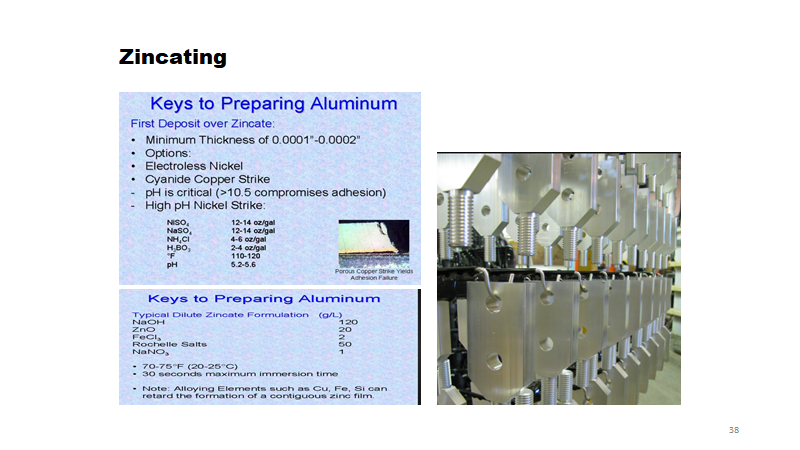
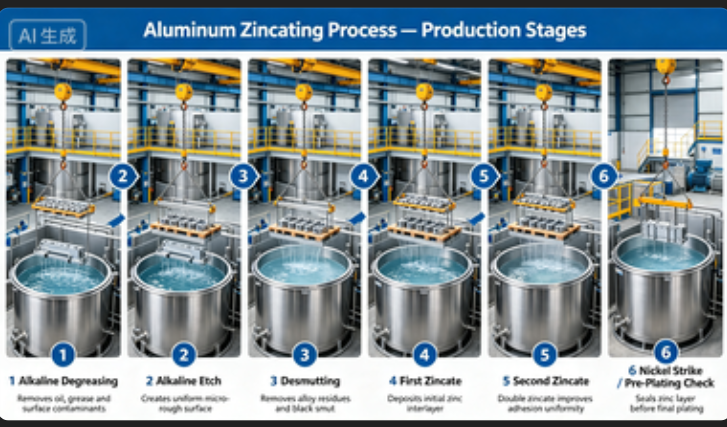
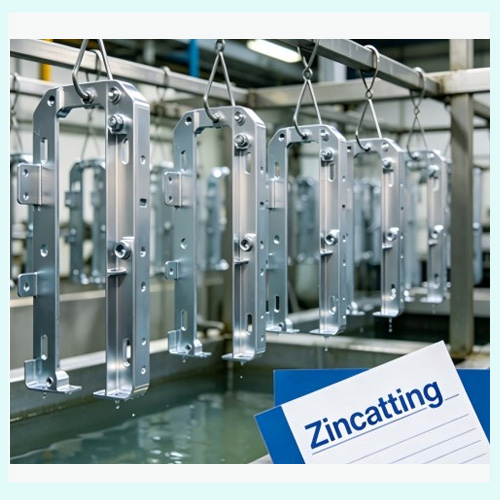
Using an alkaline zincate bath, zincating in-situ deposits an ultra-thin conductive zinc alloy interlayer on aluminum parts. This barrier prevents re-oxidation by air and creates an adherent substrate for subsequent electroplating. This process relies on electroless displacement, requiring no external electric current.
Productprocess flowTDSMSDSID:Product Details
process flow
TDS
MSDS
C Functions
of Zincate Interlayer
1. Suppress
re-formation of aluminum oxide: Isolate the substrate from air to stop rapid
re-growth of insulating oxide film on aluminum surfaces.
2. Serve
as an adhesion bridge for electroplating: Metallic bonding forms between zinc
and aluminum; zinc also exhibits excellent compatibility with copper, nickel
and chromium coatings, eliminating the peeling issue of direct plating on
aluminum.
3. Improve
coating uniformity: The uniform conductive underlayer avoids edge burning and
low-current-area missing plating in subsequent electroplating steps.
4. Buffer
thermal stress: Alleviate the discrepancy in thermal expansion coefficients
between aluminum substrate and electroplated metals, preventing blistering and
cracking under alternating high/low temperature cycles.
Zincating is an indispensable displacement pre-treatment process prior to electroplating on aluminum alloys. Aluminu is highly chemically active and instantly forms a dense, insulating aluminum oxide film when exposed to air. Direct electroplating of copper, nickel or chromium will lead to full peeling of coatings. Industrial formulations add nickel, copper, iron and complexing agents to form quaternary Zn-Ni-Cu-Fe alloy films, which improve layer density and coating adhesion. Two main bath categories are available: traditional cyanide-containing and eco-friendly cyanide-free systems.
Single
Zincate vs Double Zincate
(Two
Main Industrial Processes)
· Process
flow: One single immersion in zincate solution, no intermediate zinc stripping
step
Primary zincate
immersion → Nitric acid zinc stripping → Secondary thin zincate immersion
· Mechanism:
The first zincating step
removes surface oxides and contaminants yet yields a rough, porous zinc film.
The secondary
deposition produces ultra-fine, continuous pore-free zinc grains.
· Performance
benefits: 2–3 times stronger adhesion, tensile strength up to 28.5 MPa,
excellent thermal shock and humidity resistance without peeling, and mitigated
risk of intergranular corrosion.
· Applications:
Die-cast aluminum
(high-silicon AlSi alloys), automotive wheel hubs,
electronic connectors, aerospace components, medical precision parts,
multi-layer plated products (pyrophosphate copper, semi-bright nickel,
hard/decorative chrome plating)