Alum Phosphating
Phosphate coatings are usually applied to carbon steel, low-alloy steel and cast iron. The coating is formed with a solution of iron, zinc or manganese phosphate salts in phosphoric acid, and is applied by either spraying the solution onto the substrate, or immersing the substrate into the solution. Phosphating creates a protective layer of passive oxide film of phosphate crystals that slows corrosion. It is use best for paint adhesion.
Productprocess flowTDSMSDSID:Product Details
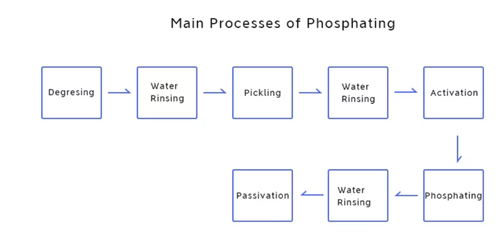
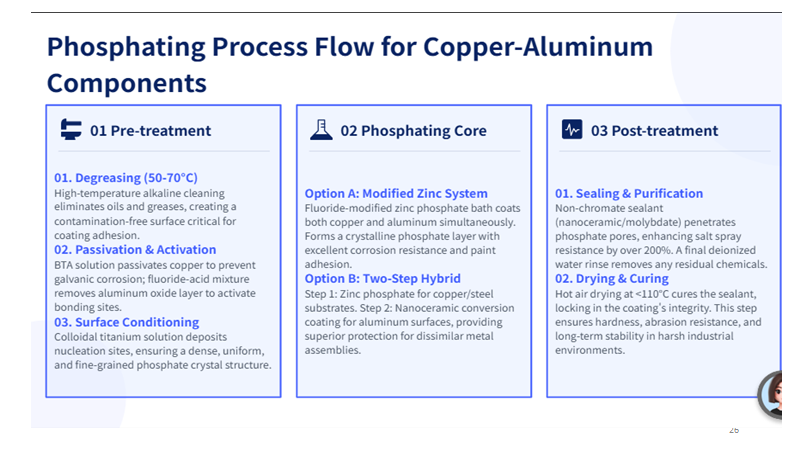
process flow
TDS
MSDS
This process involves the
following steps:
1.Metal Dissolution: The phosphoric acid reacts with the metal surface, releasing metal ions.
2.Phosphate Layer Formation: The metal ions react with phosphate ions to form insoluble phosphate crystals.
3.Coating Growth: The phosphate crystals grow and bond to the metal surface, creating a uniform layer
Phosphating offers several benefits, including:
•Corrosion Protection: The phosphate coating acts as a
barrier against moisture and other corrosive agents.
•Improved Paint Adhesion: The porous surface created
by phosphating provides an excellent key for paint and other coatings.
The types of phosphating include:
Iron Phosphating:
•Provides increased paint adherence and impact resistance, but offers the least corrosion resistance. Commonly used for indoor equipment.
Zinc
Phosphating
•Offers
the best corrosion resistance and is widely used in automotive applications, it
forms a passivate oxide efilm thata
slows corrosion.
Manganese Phosphating:
•Known for
itself lubrication and wear resistance, making it suitable for engine parts and
gear .
When steel or iron parts are placed in the
phosphoric acid, this causes a metal reaction which locally depletes the
hydronium (H3O+) ions, raises the pH, and causes the dissolved salt to fall out
of the solution and precipitate on the surface. The acid and metal reaction
also creates iron phosphate, which may be deposited. For paint and powder
coatings, a phosphate coating has two main functions.
First, the coating
provides improved paint and powder coating adhesion since the phosphate
crystals act as organic coating anchoring sites. Second, the phosphate layer
acts as a corrosion barrier should the organic coating get scratched. The
ability of phosphating to produce various colors depends on factors like the
coating formation mechanism, phosphating solution formula, process parameters,
and post-treatment. Below, we explore these in detail.
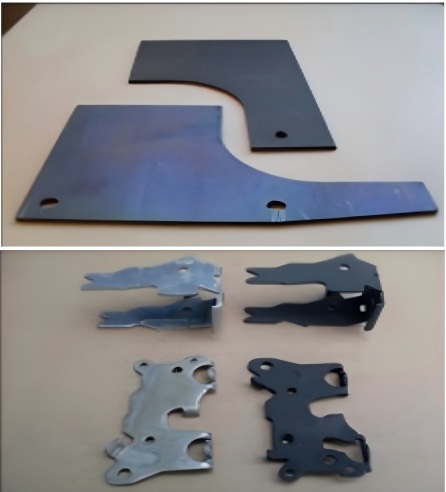
Coating Formation Mechanism : The phosphate coating forms through a chemical reaction between active sites on the metal surface and phosphate ions in the solution. Different metals and phosphate ions produce distinct chemical combinations, resulting in coatings with varying colors and properties. For example, iron phosphate films typically appear gray-black, while zinc phosphate films may be light yellow or gray.
Phosphating Solution : The solution’s composition significantly influences the coating’s color and performance. Typically containing phosphates, additives, and auxiliaries, the solution’s phosphate type and concentration alter the coating’s composition and structure, affecting its color. Additives like organic dyes or inorganic pigments can also be included to produce specific colors.
Process Parameters : Parameters like temperature, time, and pH affect the reaction rate and extent, influencing the coating’s composition and structure. For instance, higher temperatures can accelerate the reaction, creating a denser, more uniform coating, while longer processing times result in thicker, more robust coatings. These changes impact the coating’s color and performance.
Post-Treatment : Post-treatments like rinsing, drying, and passivation can alter the coating’s surface state and chemical properties, affecting its color and performance. For example, different passivating agents can modify the coating’s color and corrosion resistance during passivation.