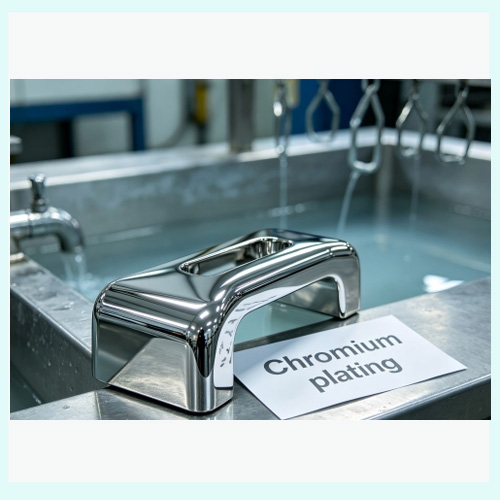
Chromium plating
Chrome Electroplating is a surface treatment process in which a layer of metallic chromium is deposited onto the surface of metal workpieces from a chromic-acid-based plating solution under the action of a direct current electric field. It is also the most widely adopted chromium plating method in industry.
Productprocess flowTDSMSDSID:Product Details
process flow
TDS
MSDS
Chrome electroplating generally uses a high-concentration chromic acid solution as the working bath. This process has extremely low current efficiency, only 10% to 25%. A large amount of hydrogen gas is generated during the reaction, and the bubbles rise continuously like champagne, carrying tiny chromic acid droplets and overflowing together. In addition, regulatory agencies around the world have identified chromic acid as a carcinogenic substance.
Feasible solutions to this problem are as follows: A local exhaust and ventilation system equipped with a waste gas scrubber is used to collect chromic acid waste gas (but the equipment installation and maintenance costs are high). Fume suppressants can be used to inhibit the escape of chromic acid mist during chrome plating production. A large number of bubbles are generated by the electrolytic reaction, and when the bubbles burst, tiny chromic acid droplets are thrown into the air, thereby forming chromic acid mist. Fume suppressants can reduce the surface tension of the solution, form a stable foam layer on the liquid surface, and trap the aerosol before it diffuses into the air.
Chrome electroplating is not a universal solution. Depending on the actual application requirements, different workpieces require corresponding process routes, which are mainly classified into the following categories:
1. Decorative Chrome Plating
· Coating thickness: 0.005~0.025 mm, usually applied over a nickel underplate
· Core purpose: High-brightness appearance and moderate corrosion protection
· Typical products: Bathroom hardware, automotive exterior parts, motorcycle appearance parts, kitchen and bathroom accessories
2. Hard Chrome Plating (Industrial Hard Chrome)
· Coating thickness: 0.02~0.25 mm, directly deposited on the base metal
· Core purpose: High hardness, wear resistance and pressure resistance
· Typical products: Hydraulic cylinders, pressure rollers, molds, friction parts of construction machinery
3. Thin Dense Chrome Plating (Thin-Film Hard Chrome)
· Coating thickness: <0.01 mm
· Features: High hardness can be achieved with a thin coating, far fewer microcracks than ordinary hard chrome, and excellent dimensional accuracy
· Typical products: Precision molds, precision cutting tools, parts with strict tolerance requirements
4. Flash Chrome Plating (Thin Chrome Flash Plating)
· Coating thickness: <0.0025 mm (ultra-thin layer)
· Features: Short electroplating time, low cost; lower gloss than standard decorative chrome
· Typical products: Automotive interior parts, costume jewelry, low-cost workpieces that only require a chrome appearance
5. Satin Chrome Plating (Matte Chrome / Brushed Chrome)
· Process features: The nickel underplate is first textured and then chrome-plated; soft diffused luster, non-dazzling
· Advantages: Less prone to fingerprint marks, silky to the touch, and corrosion resistance equivalent to bright chrome
· Typical products: High-end home appliance casings, architectural hardware, light luxury bathroom accessories
6. Black Chrome Plating
· Process features: The crystal structure of chrome is changed by adding special additives to obtain a pure black coating
· Advantages: Unique appearance and good corrosion resistance
· Typical products: Custom motorcycle parts, high-end furniture hardware, decorative parts with special appearance requirements