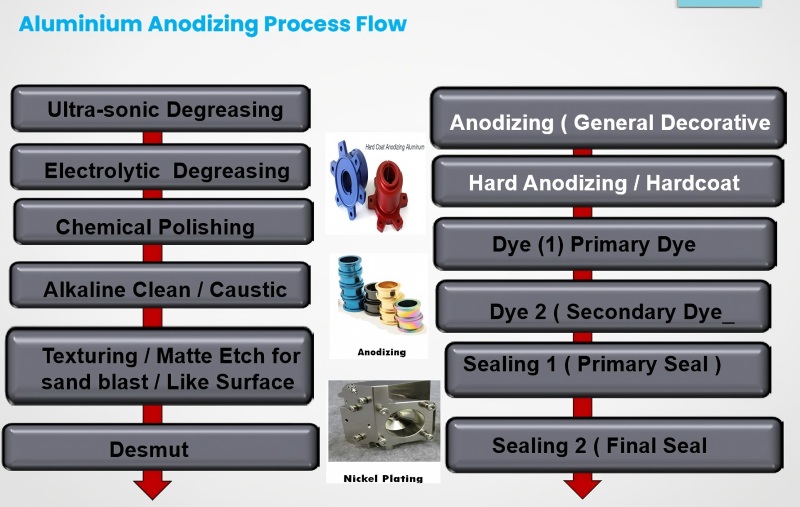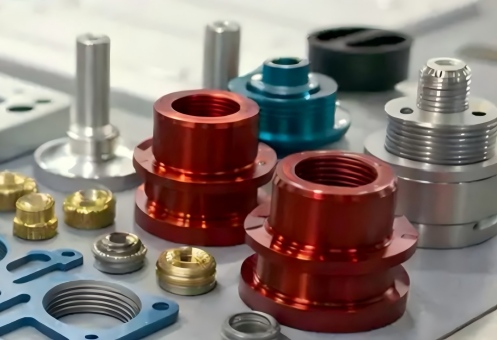
Alum anodizing
Anodizing converts aluminum’s surface into a hard, adherent porous aluminium‑oxide layer. It improves hardness, wear resistance and corrosion protection. The porous structure enables dye‑based colouring while sealing stabilises the final surface finish.
Productprocess flowTDSMSDSID:Product Details
process flow
TDS
MSDS
Anodizing serves multiple purposes: it dramatically improves corrosion resistance, enhances surface hardness, provides electrical insulation, and allows for permanent coloring. The anodized layer also serves as an excellent base for adhesive bonding and improves paint adhesion when needed.
Aluminum alloys are anodized to increase corrosion resistance and to allow dyeing (coloring),improved lubrication, or improved adhesion. However, anodizing does not increase the strength of the aluminium object. The anodic layer is insulative.When exposed to air at room temperature, or any other gas containing oxygen, pure aluminium self-passivates by forming a surface layer of amorphous aluminium oxide 2 to 3 nm thick, which provides very effective protection against corrosion
The anodic layer is insulative When exposed to air at room temperature, or any other gas containing oxygen, pure aluminium self-passivates amorby forming a surface layer of amorphous aluminium oxide 2 to 3 nm thick which provides very effective protection against corrosion
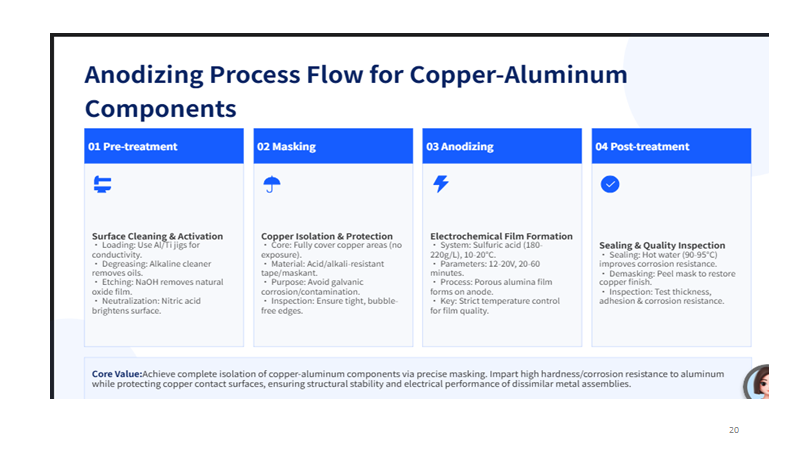
luminum Anodizing: Sequence, Function & Spherical‑Enclosure Visual Description
Process Sequence
-
Alkaline degreasing: Remove oil, grease and surface contaminants from aluminum parts. DI‑water rinse follows.
-
Alkaline etching: Controlled surface micro‑etch to smooth surface and eliminate minor defects. Rinse thoroughly.
-
Desmutting: Acid bath dissolves alloy smut and residual metallic residues left after etching. DI‑water rinse.
-
Anodizing electrolysis: Aluminum acts as the anode inside acidic electrolyte. Applied voltage grows a hard, porous aluminum‑oxide film on the part surface.
-
Rinsing: Multi‑stage deionized water rinsing removes residual acid electrolyte.
-
Coloring (optional): Dye impregnates the porous oxide layer for decorative colour.
-
Sealing: Hot‑water or nickel‑salt sealing closes oxide pores to boost corrosion resistance and lock‑in colour.
-
Drying & quality check: Hot‑air drying, inspect film thickness, appearance and integrity.
What anodizing does