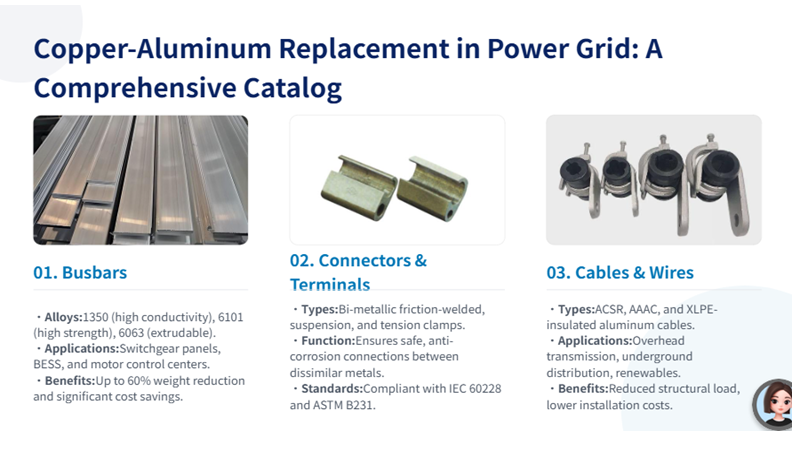
Alum Copper Replacement
From electrical wiring and power transmission to EVs, solar systems, aerospace, and electronics. It visually compares aluminum’s lightweight, cost‑efficient advantages against copper’s traditional conductivity. This concept is increasingly relevant for industries seeking eco‑friendly and cost‑optimized materials. Aluminum’s lower density and corrosion resistance make it ideal for power transmission lines, EV busbars, and heat sinks.
Productprocess flowTDSMSDSID:Product Details
process flow
TDS
MSDS
If a design change from copper to aluminum is being considered, an underplate combination of various nickels and/or copper can be provided that enhances the corrosion resistance of the wrought aluminum alloy.
However,
aluminum alloys offer the unique combination of both electrical and mechanical
properties to be a potential alternative to copper.
The
entire surface finish including pretreatment, strikes, underplates and topcoats
need to be evaluated to ensure that aluminum components will function as
designed over the lifespan of the product.
After
a properly tailored pretreatment, the
process utilizes a modified double zincate process followed by advanced
electroless nickel chemistries adapted for aluminum to provide
a consistently bonded nickel strike independent of part geometry.
The
key to the zincate layer is it is completely removed in the following
electroless nickel strike. As such, the bond of the zincate does not
impact the bond of the final plated layers since the electroless nickel bonds
directly to the aluminum with no immersion deposits in between.
IN
addition , since an electroless nickel strike is utilized, any geometry no
matter how complex will receive the same strike thickness.
As
a result, subsequent plated layers such as copper, tin or silver bond
uniformly and consistently to the underlying electroless nickel deposit without
issues in low current or recess features as can occur with traditional or
proprietary Alstan
or Bondal processes.
After a properly tailored pretreatment, the process utilizes a modified double zincate process followed by advanced electroless nickel chemistries adapted for aluminum to provide a consistently bonded nickel strike independent of part geometry.
The key to the zincate layer is it is completely removed in the following electroless nickel strike. As such, the bond of the zincate does not impact the bond of the final plated layers since the electroless nickel bonds directly to the aluminum with no immersion deposits in between.
IN addition , since an electroless nickel strike is utilized, any geometry no matter how complex will receive the same strike thickness.
As a result, subsequent plated layers such as copper, tin or silver bond uniformly and consistently to the underlying electroless nickel deposit without issues in low current or recess features as can occur with traditional or proprietary Alstan or Bondal processes.