ABS Plastic Base
Plating on plastics, also known as Plastic Electroplating (POP), involves making a non-conductive plastic surface suitable for metal deposition. The process apply a metal coating to a plastic substrate to enhance appearance, durability, conductivity, and corrosion resistance.
Productprocess flowTDSMSDSID:Product Details
process flow
TDS
MSDS
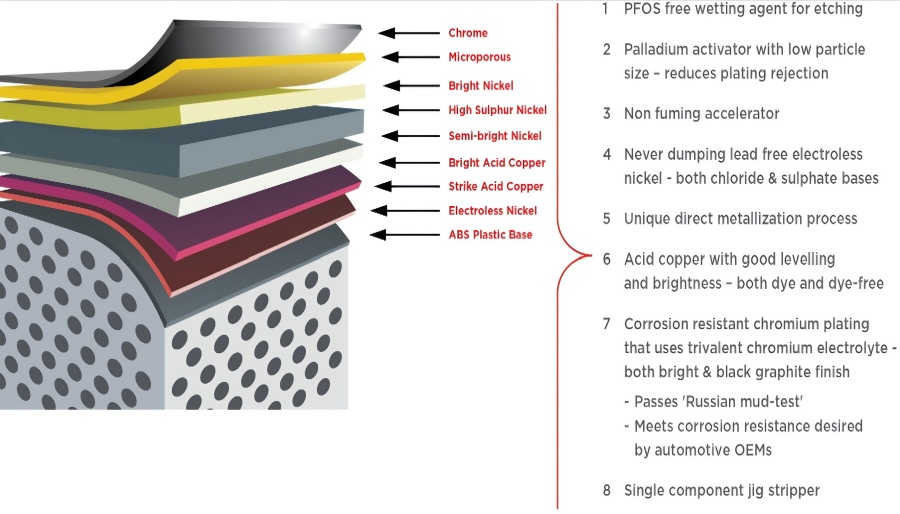
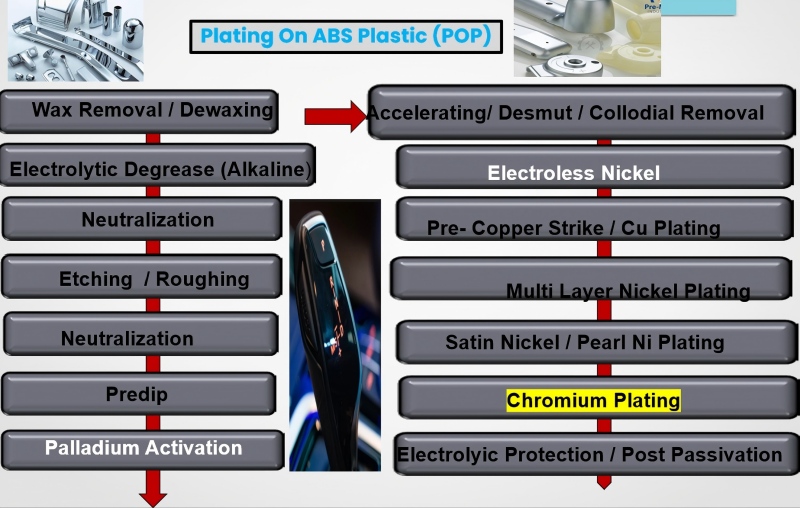
POP typically begins with surface preparation, which includes cleaning, etching, and activation to create bonding sites for the metal layer. Common etching methods use chromic acid or other chemical solutions to roughen the surface microscopically, followed by a catalyst application such as palladium or tin salts to initiate metal deposition
Once activated, the plastic can undergo electroless plating, where metals like nickel or copper are deposited chemically without an electric current. This layer makes the plastic conductive and allows for electroplating, where an electric current deposits additional metal layers such as nickel, copper, chromium, gold, or silver. Electroplating can increase thickness, durability, and corrosion resistance, while electroless plating ensures uniform coverage, especially on complex shapes